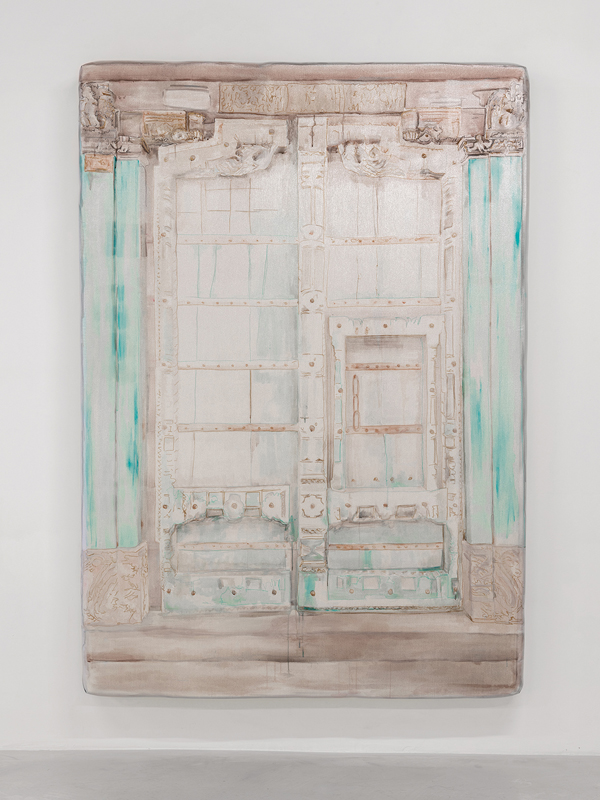
Chinoiserie, la Porte Austur-Indíafjelagið /
Chinoiserie, the Austur-Indíafjelagið Door - 2024
Sommier de lit Ikea en bois, tissu et polyester, peinture acrylique /
Ikea bed base in wood, fabric and polyester, acylic paint.
c. 196 x 140 x 13 cm
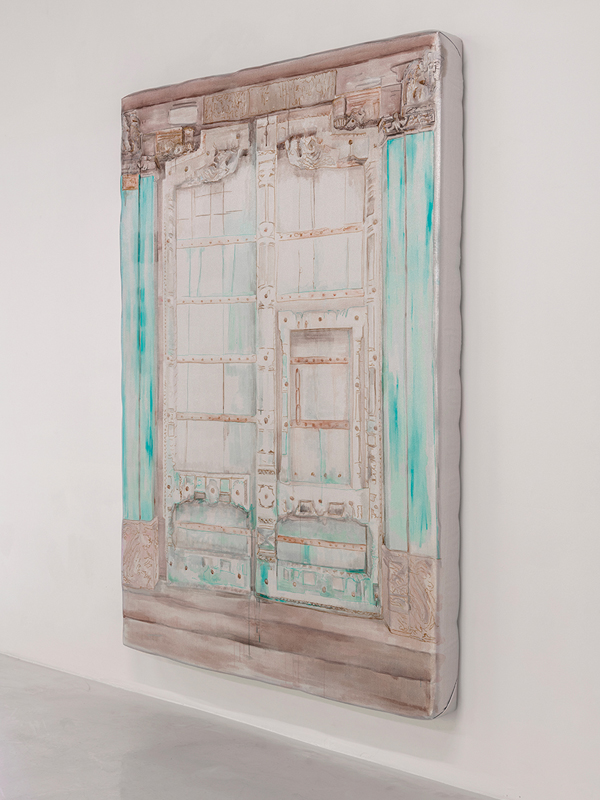
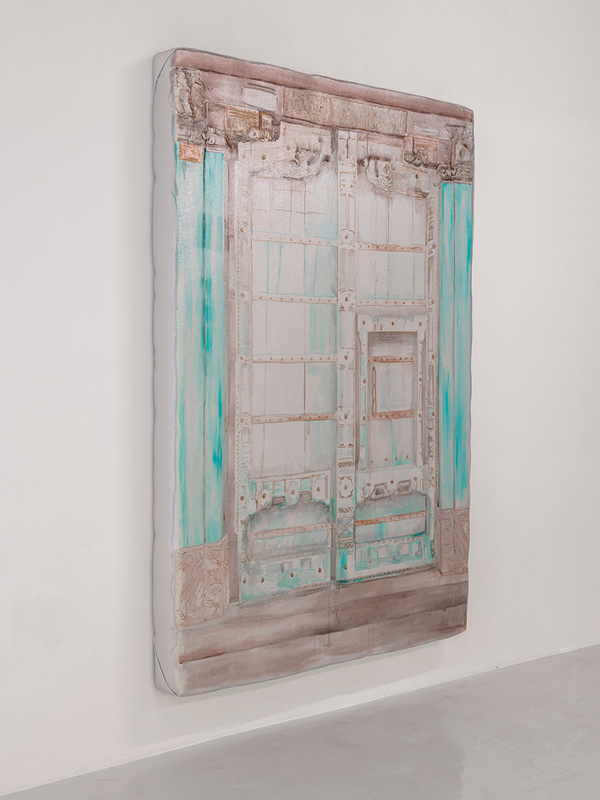
Vue de l'exposition Dévoré, 2024 - Galerie Air de Paris /
View of the Dévoré exhibition, 2024 - Air de Paris gallery
La porte d’Austur-Indíafjelagið prolonge la série des chinoiseries du Projet Dévoré. Sur une toile argentée tendue sur le châssis d’un sommier de lit IKÉA, est représentée en peinture la porte du restaurant indien Austur-Indíafjelagið – que l’on peut traduire par Comptoir des Indes orientales – à Reykjavik. La façade de cette entrée, sculptée dans du bois, illustre un syncrétisme plastique combinant tradition nordique et motifs de gravure indienne.
Les devantures de restaurants orientaux arborent fréquemment des ornements traditionnels destinés à inviter le consommateur à un voyage avant d’en franchir le seuil. Cette mise en scène, portée par des éléments décoratifs intégrés à une architecture locale, participe de l’ambiance immersive du lieu. Tout comme la vaisselle contribue à l’art de la table, ces artefacts décoratifs véhiculent des signes culturels essentiels à l’expérience proposée.
Ces objets témoignent de la circulation d’éléments importés d’Orient ou d’Asie, mais servent aussi de repères culturels universels. Ainsi, que l’on soit à Mexico, Paris, Reykjavik ou Barcelone, on reconnaît des marqueurs visuels d’une tradition culinaire parfois éloignée géographiquement, mais capable d’offrir un sentiment de familiarité et de réconfort, comparable à celui d’un plat maison.
The door to Austur-Indíafjelagið continues the series of chinoiseries in the Devoured Project. On a silver canvas stretched over the frame of an IKÉA bed base, the door of the Indian restaurant Austur-Indíafjelagið - which translates as East India Company - in Reykjavik is painted. The front of this entrance, carved in wood, illustrates a plastic syncretism combining Nordic tradition and Indian engraving motifs. The fronts of Oriental restaurants often feature traditional ornaments designed to invite customers to take a journey before crossing the threshold. This setting, supported by decorative elements integrated into the local architecture, contributes to the immersive atmosphere of the place. Just as tableware contributes to the art of the table, these decorative artefacts convey cultural signs that are essential to the experience on offer. These objects bear witness to the circulation of elements imported from the East or Asia, but also serve as universal cultural markers. So whether you're in Mexico City, Paris, Reykjavik or Barcelona, you'll recognise the visual markers of a culinary tradition that may be geographically distant, but is capable of offering a sense of familiarity and comfort, comparable to that of a home-cooked meal.